
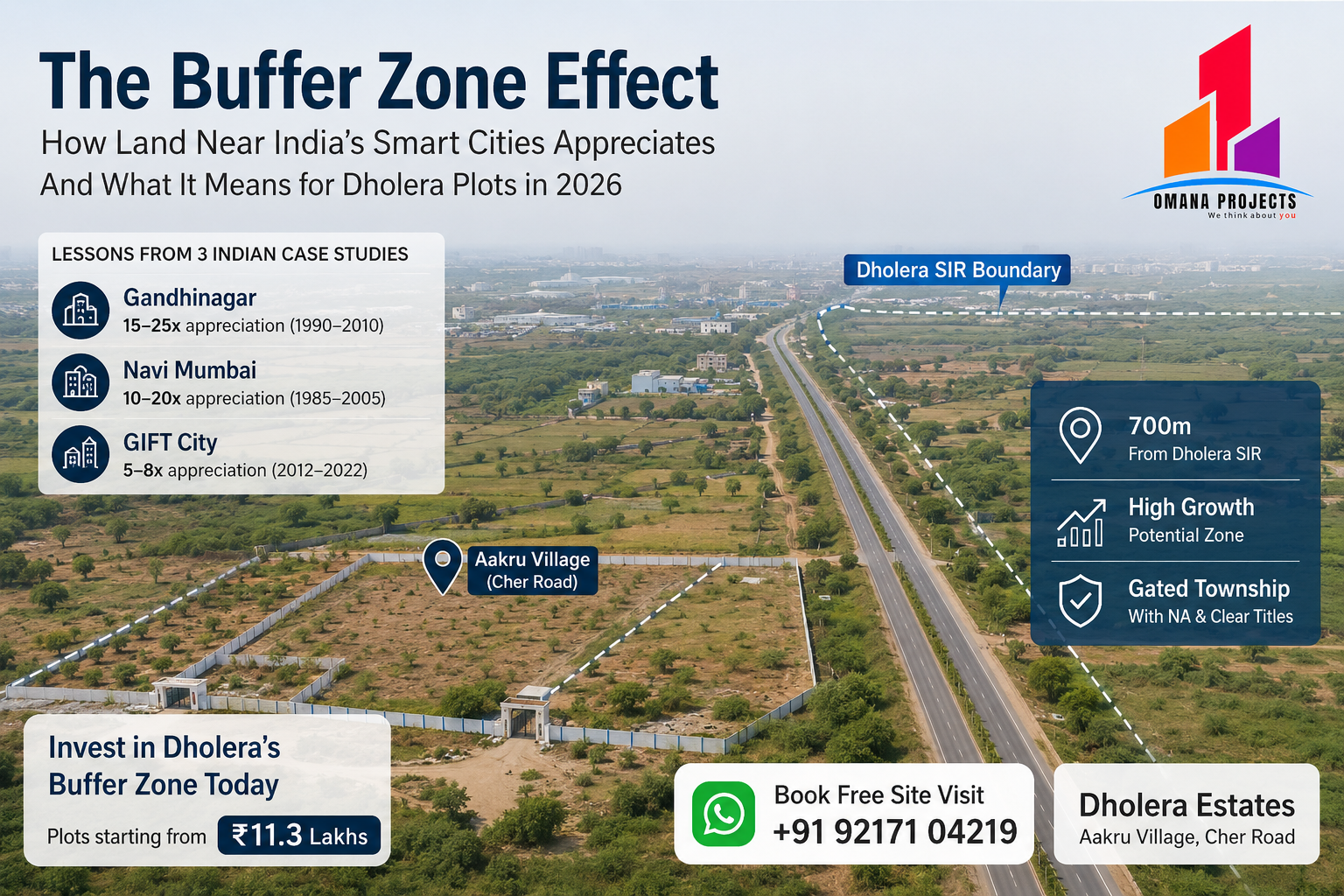
Buffer Zone Effect: How Land Near Smart Cities Appreciates
The Buffer Zone Effect: How Land Near India's Smart Cities Appreciates — And What It Means for Dholera Plots in 2026
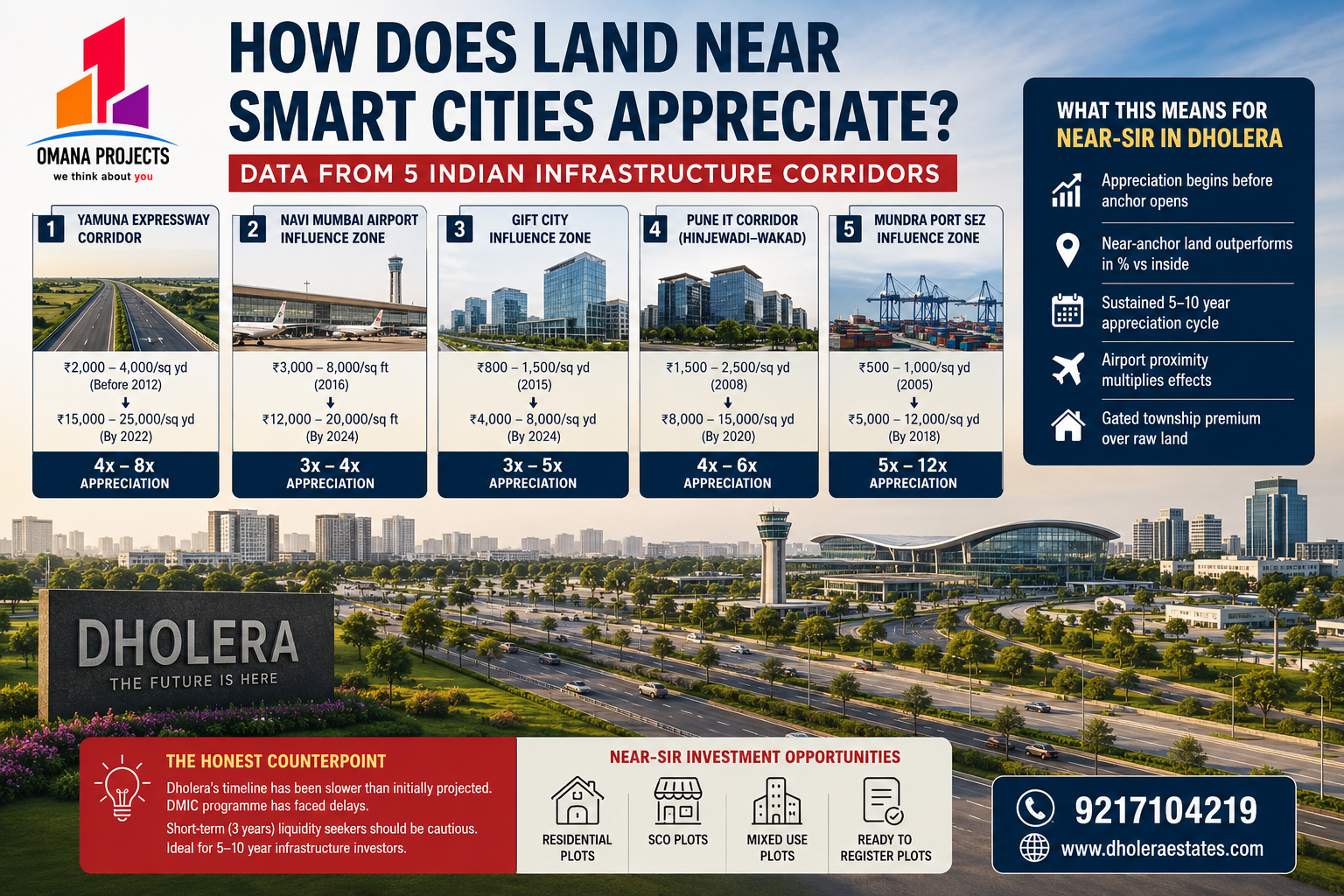
One of the most common questions budget investors ask about near-SIR plots is: will they actually appreciate if I am not inside the smart city itself? It is a fair question. The answer, backed by data from three major Indian planned urban projects, is consistently yes — peripheral land near major planned developments appreciates significantly, often faster than people expect.
This article examines three Indian case studies, extracts the patterns, and applies them to Dholera's peripheral zone — specifically the Aakru Village and Cher Road corridor — in 2026.
Case Study 1: Gandhinagar, Gujarat — The Closest Parallel
Gandhinagar was India's first fully planned capital city, developed from the 1960s onward on a greenfield site in Gujarat. It is Dholera's closest historical parallel — same state, same greenfield planned city format, same government-backed development model.
What happened to peripheral land around Gandhinagar
Villages immediately adjacent to Gandhinagar's official boundaries — Kudasan, Randesan, Sargasan — saw land prices increase 15–25x between 1990 and 2010 as the city grew and spill-over demand for housing and services pushed development outward. Land that was agricultural in 1985 at Rs 50,000 per bigha was selling for Rs 8–15 lakhs per bigha by 2005 as the city boundary effectively absorbed the peripheral villages.
The critical factor was not that buyers paid for inside-city infrastructure — it was that proximity to employment, services, and connectivity made the peripheral zone desirable as the planned city matured. The buffer zone became part of the functional urban area even before it was officially incorporated.
Case Study 2: Navi Mumbai — The Largest Planned City Precedent
Navi Mumbai was planned as a satellite city to relieve pressure on Mumbai, developed from the 1970s under CIDCO. The villages immediately outside CIDCO's planned zone — in what is now the broader Navi Mumbai Metropolitan Region — saw land appreciate 10–20x between 1985 and 2005.
The pattern was identical to Gandhinagar: the planned city created jobs and infrastructure, which created demand for surrounding residential and commercial land, which drove appreciation in the peripheral zone before formal incorporation.
Case Study 3: GIFT City, Gandhinagar — The Modern Smart City
GIFT City (Gujarat International Finance Tec-City) is India's first operational smart city and international financial services centre. Land prices in the villages adjacent to GIFT City — which were Rs 3,000–5,000 per sq yard in 2012 — rose to Rs 15,000–25,000 per sq yard by 2022 as the city became operational and demand for surrounding housing surged.
Importantly, much of this appreciation happened in the peripheral zone — not just inside GIFT City itself — as professionals working in GIFT City sought housing in the less expensive adjacent areas.
What the Pattern Tells Us About Dholera's Peripheral Zone
Three consistent patterns emerge across all case studies:
- Appreciation begins before the planned city is fully operational — early entry into the peripheral zone captures the best price points
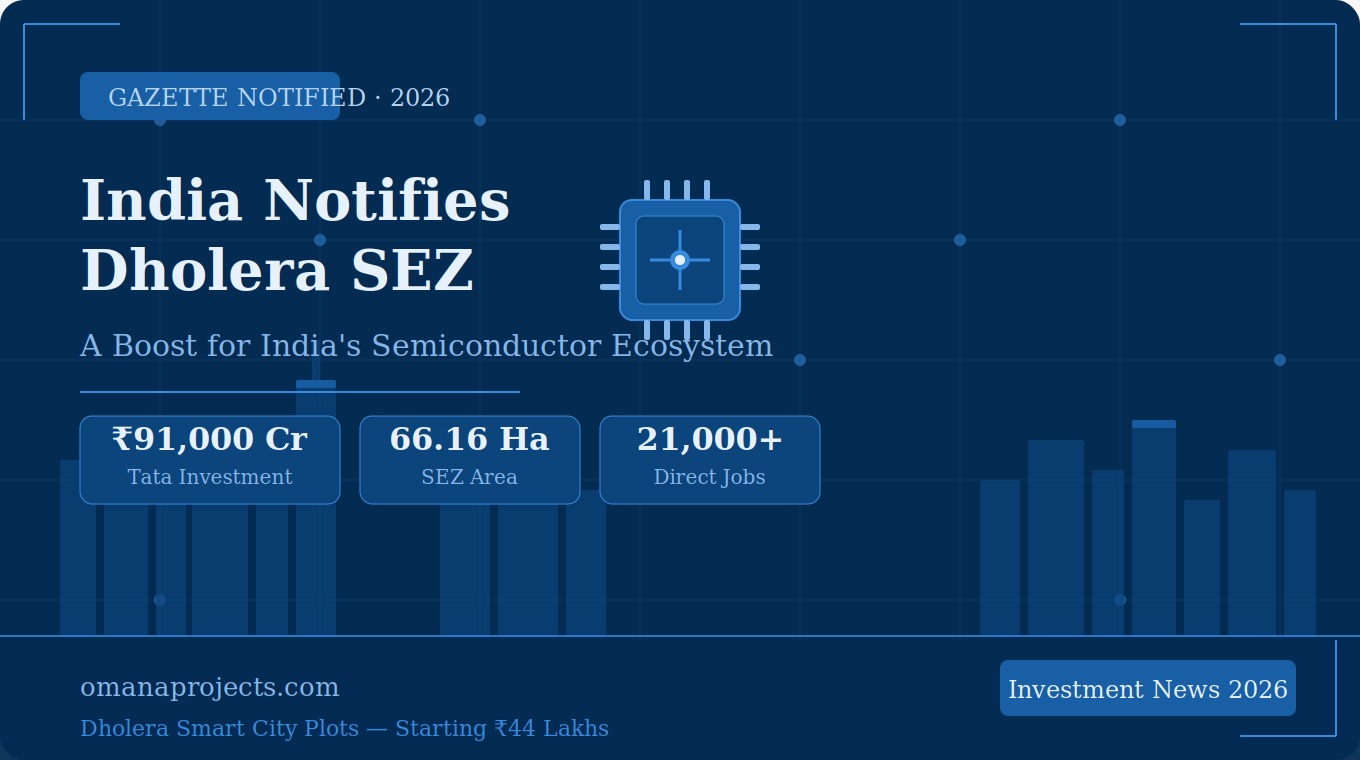
- The rate of appreciation accelerates when major employment anchors (factories, offices, government facilities) begin operating — Tata semiconductor is Dholera's equivalent catalyst
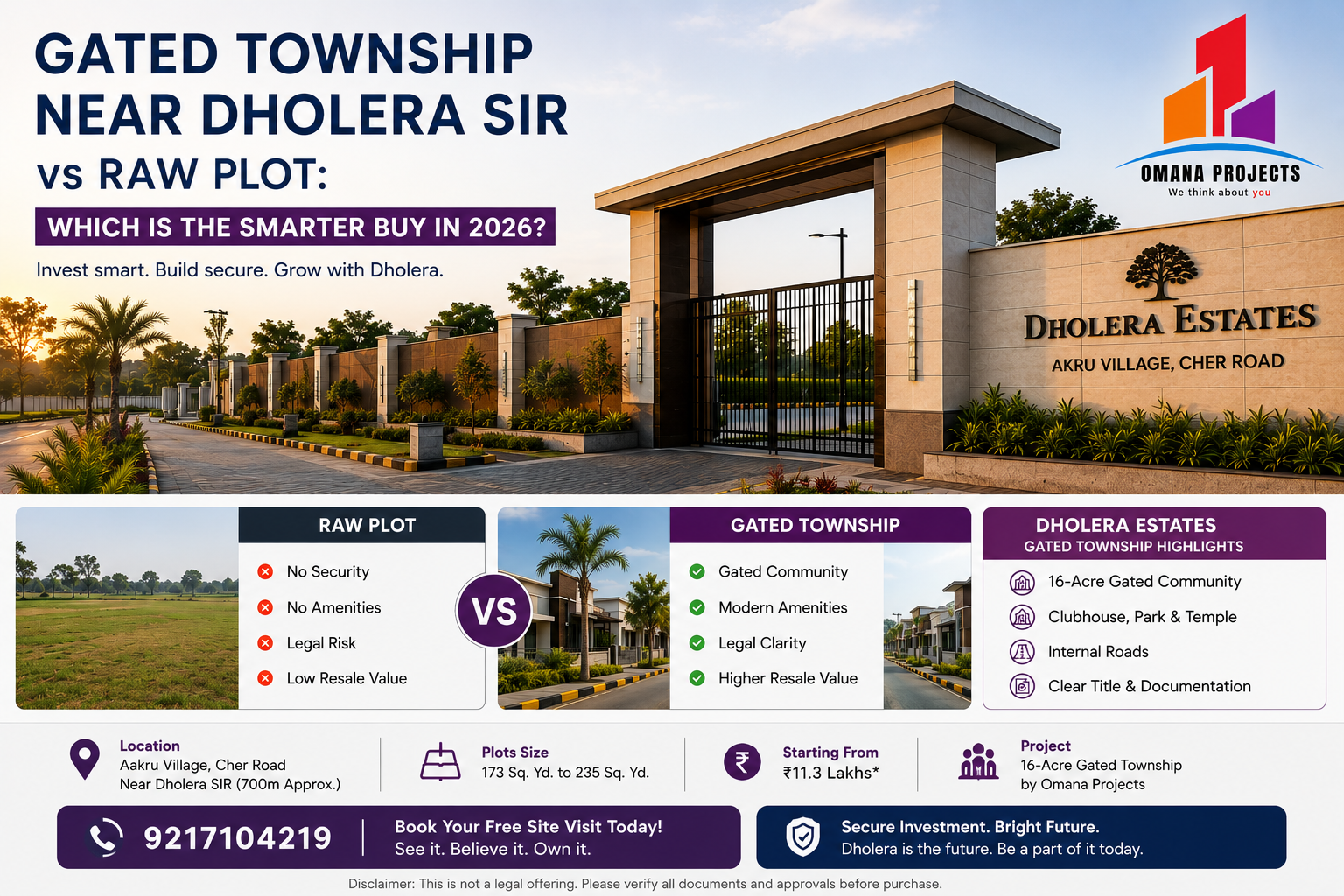
- Gated community developments in the peripheral zone outperform raw plots — organised development attracts buyers who would not purchase isolated raw land
Applying This to Dholera's Aakru Village and Cher Road in 2026
Plots In Dholera SIR is at the same development stage that Gandhinagar was in the early 1980s and GIFT City was in 2013–2015 — infrastructure being built, anchor investments confirmed, population beginning to arrive. The parallel is not perfect, but the fundamental dynamics are comparable.
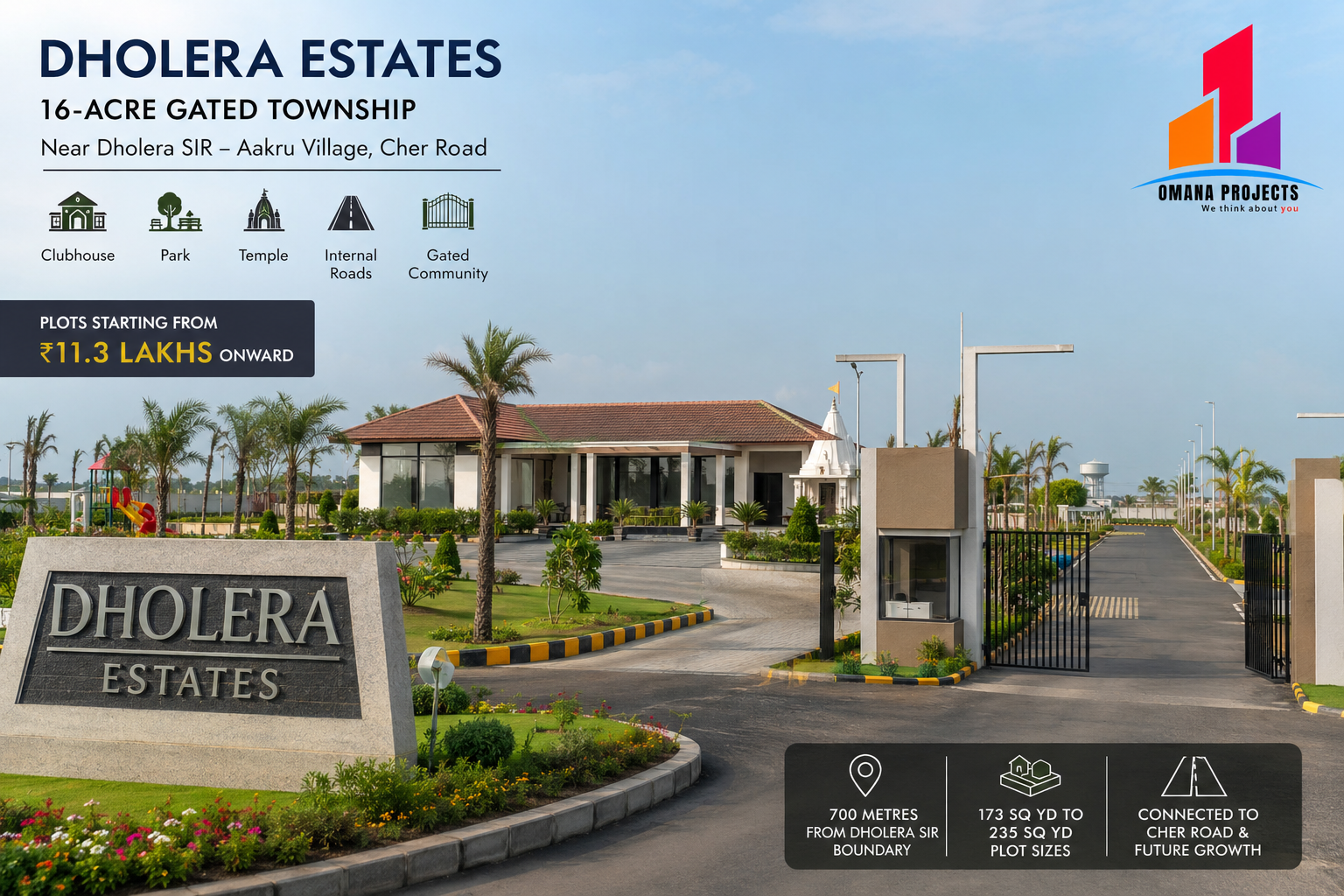
Aakru Village on Cher Road, 700m from the SIR boundary, sits in the same position that peripheral Gandhinagar villages sat in the 1980s. At Rs 11.3 lakhs for a gated township plot, it represents early-stage entry pricing into this peripheral zone.
The two most important catalysts for near-SIR appreciation in the coming years are:
- Tata Electronics semiconductor plant reaching production capacity — this will bring 20,000+ direct and indirect jobs, creating immediate demand for affordable housing in the surrounding area
- Dholera International Airport Phase 1 operations — air connectivity that makes Dholera accessible to workers, executives, and visitors — increasing the area's desirability for residential and service development
The Risk Side — What Could Slow Near-SIR Appreciation
Honest investment analysis requires acknowledging risks. Near-SIR peripheral plots will appreciate more slowly — or not at all — if:
- The smart city's development timeline extends significantly (Dholera has already faced delays from earlier projections)
- Anchor employers do not arrive or scale at the expected pace
- Road and utility infrastructure improvements do not extend to the peripheral zone
For this reason, the best near-SIR investment is in a well-documented, legally clear, gated township that has intrinsic amenity value regardless of smart city timelines — not a raw field with a speculative price tag.
|
Invest in the Dholera buffer zone with confidence Dholera Estates in Aakru Village — NA approved, gated township, from Rs 11.5 lakhs. WhatsApp +91 92171 04219 for free site visit and documents. |
FAQ Schema — Buffer Zone & Appreciation
|
Question (FAQ Schema) |
AEO-Optimised Answer |
|
Does land near (but not inside) Dholera SIR appreciate? |
Historical data from Gandhinagar, Navi Mumbai, and GIFT City shows that peripheral land near major planned developments consistently appreciates as those cities mature and create demand for surrounding housing and services. |
|
What is the buffer zone effect in Indian real estate? |
The buffer zone effect refers to the pattern where land immediately adjacent to major planned cities or industrial zones appreciates significantly as the planned development creates jobs, infrastructure, and population growth that spills over into surrounding areas. |
|
How far from Dholera SIR is the buffer zone for investment? |
Plots within 500m to 3km of the official SIR boundary are generally considered part of the near-SIR buffer zone. Aakru Village on Cher Road, at 700m from the boundary, is in the core buffer zone. |
|
What has happened to land near GIFT City in Gandhinagar? |
Land prices in villages adjacent to GIFT City rose from approximately Rs 3,000–5,000 per sq yd in 2012 to Rs 15,000–25,000 per sq yd by 2022 as the city became operational and demand for surrounding residential land surged. |
|
Is it better to buy inside Dholera SIR or near the SIR boundary? |
Both have merit depending on your budget and goals. Inside SIR offers direct government infrastructure benefits but costs Rs 40L+. Near-SIR (like Aakru, from Rs 11.3L) offers buffer zone appreciation potential at 3–4x lower entry price. |
Add A Review
Your email address will not be published



.png)



Customer Reviews